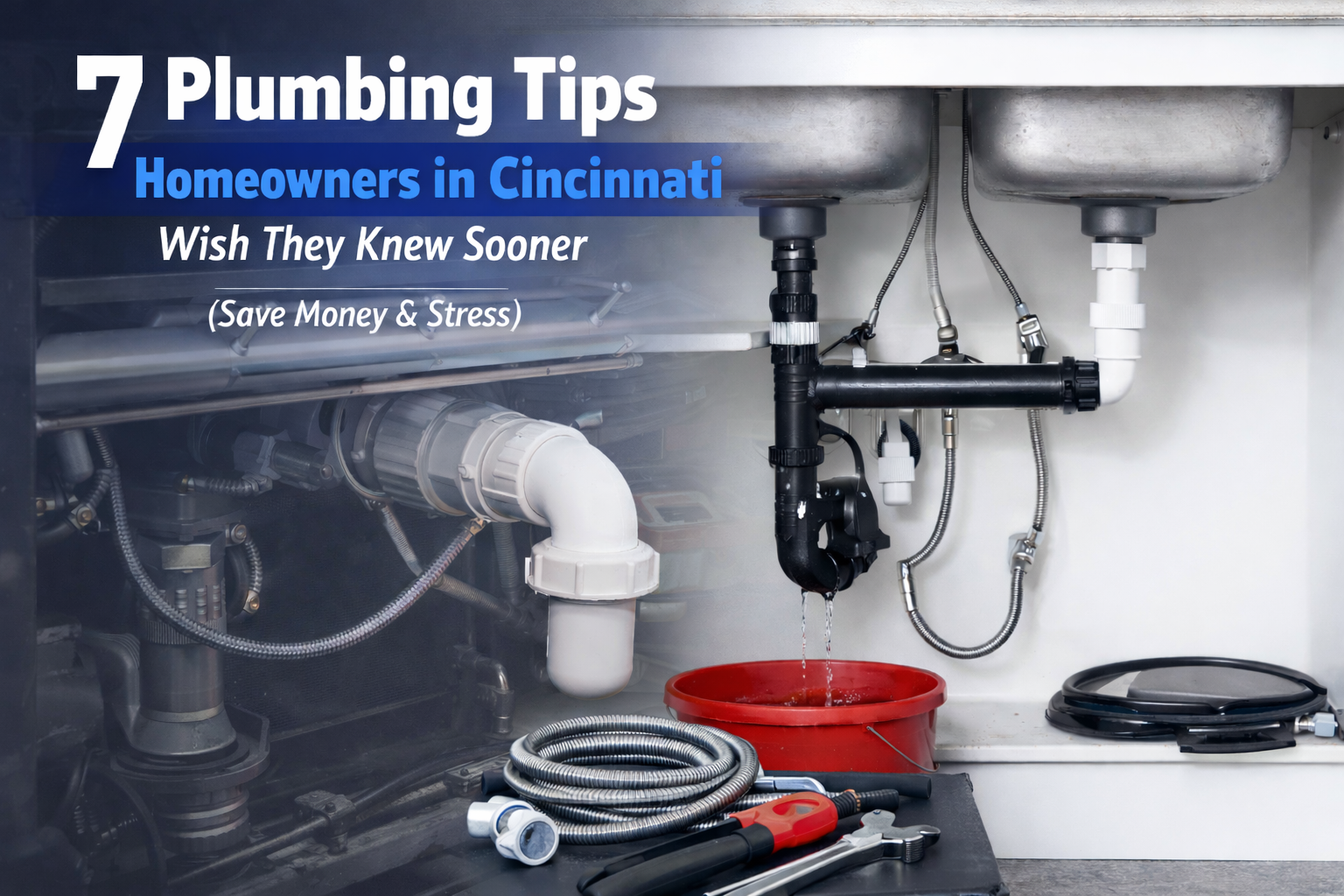
7 RESIDENTIAL TIPS HOMEOWNERS IN CINCINNATI WISH THEY KNEW SOONER
Most homeowners in Cincinnati don’t think about their plumbing system until something goes wrong. Unfortunately, small plumbing issues can quickly turn into expensive repairs if ignored. Knowing a few preventative plumbing tips can protect your home, reduce stress, and save thousands in unexpected damage.
If you’re searching for plumbing tips near me or want advice from a trusted residential plumbing contractor in Cincinnati, these expert recommendations can help you avoid common household plumbing problems.
Why Preventative Plumbing Maintenance in Cincinnati Matters
Ohio’s seasonal temperature changes, freezing winters, and heavy rainstorms can put extra stress on residential plumbing systems. Preventative plumbing maintenance helps:
- Lower emergency repair costs
- Extend the lifespan of pipes and fixtures
- Prevent water damage and mold growth
- Maintain water pressure and efficiency
Working with a local plumbing company ensures your system meets Ohio plumbing codes and stays protected year-round.
7 Plumbing Tips to Protect Your Home
Our certified plumbing team provides comprehensive residential plumbing solutions in Cincinnati:
1. Don’t Ignore Small Leaks Installation
Even a slow drip can waste hundreds of gallons of water each month. Early leak repair prevents structural damage and rising water bills.
2. Avoid Chemical Drain Cleaning
Store-bought drain cleaners can corrode pipes over time. Professional drain cleaning is safer and more effective.
3. Know Where Your Main Water Shut-off Valve Is
In a plumbing emergency, shutting off water immediately can prevent thousands in property damage.
4. Schedule Annual Water Heater Maintenance
Sediment buildup reduces efficiency and shortens the lifespan of your water heater. Routine inspections improve performance and reliability.
5. Protect Pipes During Winter
Frozen pipes are common in Midwest winters. Insulating exposed pipes reduces the risk of bursts and costly repairs.
6. Be Careful What Goes Down The Drain
Grease, food scraps, wipes, and hygiene products cause sewer backups and clogged drains.
7. Monitor Water Pressure
High water pressure can damage pipes, appliances, and fixtures. A professional pressure check protects your entire plumbing system.
Common Plumbing Problems We Fix in Cincinnati
Even with preventative care, plumbing issues can still happen. Our experienced residential plumbers handle:
- Burst pipes
- Sewer backups
- Water heater failure
- Clogged drains
- Leak detection and repair
- Fixture installation and replacement
If you need an after-hours plumber in Cincinnati, immediate service can prevent thousands in property damage.
24hr Emergency Plumber in Cincinnati
Unexpected plumbing problems can happen at any time — whether it’s a burst pipe at midnight or a sewer backup early in the morning. Immediate action is critical to limit water damage and protect your home.
Our Cincinnati emergency plumbing team responds quickly to urgent issues across the area, providing reliable repairs when you need them most. If you’re dealing with a plumbing emergency, fast professional service can make the difference between a simple repair and extensive property damage.